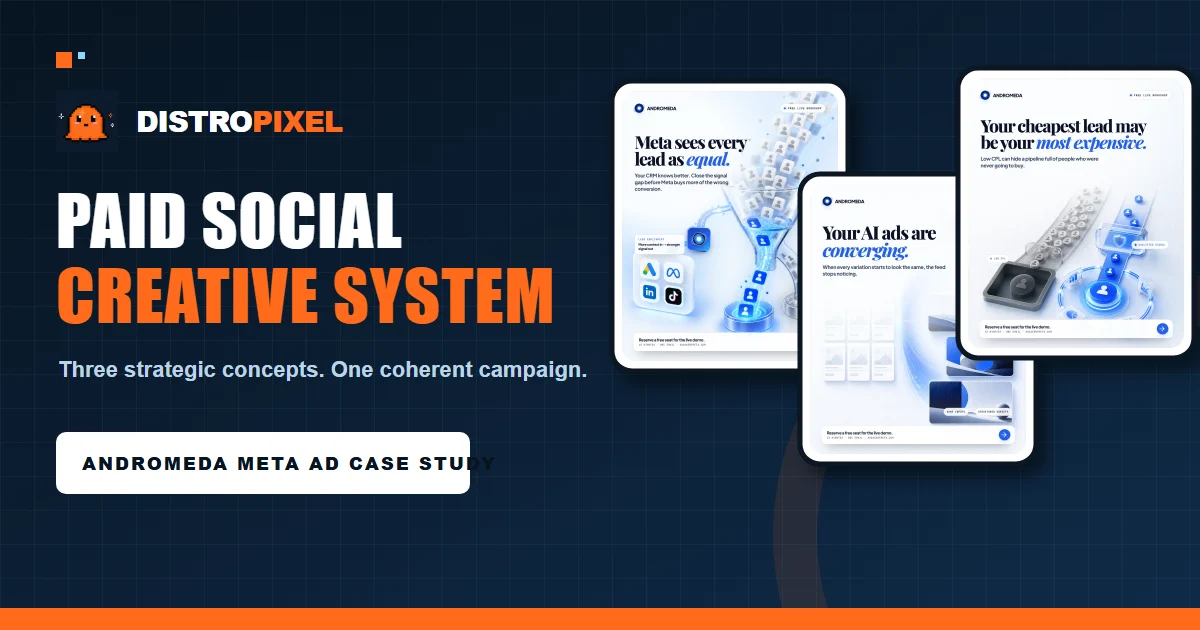
One message. A complete asset family.
A campaign becomes expensive and slow when every placement starts from zero. The better system begins with one audience, one promise, one proof point, and one next action. From there, the idea can expand into a coordinated family of still, motion, short-form, and landing-page assets.
The goal is recognizable consistency without copy-and-paste sameness. A 9:16 video needs different pacing and safe areas than a 1:1 feed ad. A landing-page visual can hold detail that a 6-second bumper cannot. The message stays aligned while the execution respects the medium.
Productized creative options
Creative concept pack
Useful when the message needs a stronger starting point. The pack defines visual territories, hooks, references, format recommendations, and sample executions before committing to a larger production run.
Campaign asset sprint
A focused build around one offer or launch. The sprint can include static designs, carousels, short-form videos, motion graphics, thumbnails, cutdowns, end cards, captions, and coordinated aspect-ratio variants.
Ongoing creative production
A repeatable queue for teams that need fresh campaign assets, social adaptations, creative testing variants, and visual support without rebuilding the production process every month.
Formats DistroPixel can produce
- Paid-social and display ad creative
- Feed graphics, carousels, and campaign systems
- Short-form vertical video and silent motion pieces
- Product demos, explainers, and promotional edits
- Thumbnails, title cards, end cards, and cutdowns
- Website, landing-page, and launch visuals
- 1:1, 4:5, 9:16, and 16:9 delivery families
- Editable source files and organized final exports
The production workflow
1. Brief the decision
Define who should notice, what they should understand, which proof matters, where the asset will appear, and what action should follow.
2. Choose the creative territory
Develop visually distinct directions with a clear reason for each. Select the route that best fits the audience, offer, placement, and existing brand.
3. Produce the master assets
Build the strongest versions first, then review message clarity, composition, pacing, legibility, captions, and brand consistency.
4. Adapt and hand off
Create placement-ready variants, organize the exports, document the naming, and deliver the agreed editable files so the work remains useful after launch.
Creative that can be measured
For paid campaigns, variants should test real differences such as hook, proof, offer framing, visual territory, or call to action. Pair the production sprint with paid media support to connect those assets to a learning plan, or with web and conversion work so the destination keeps the same promise.